
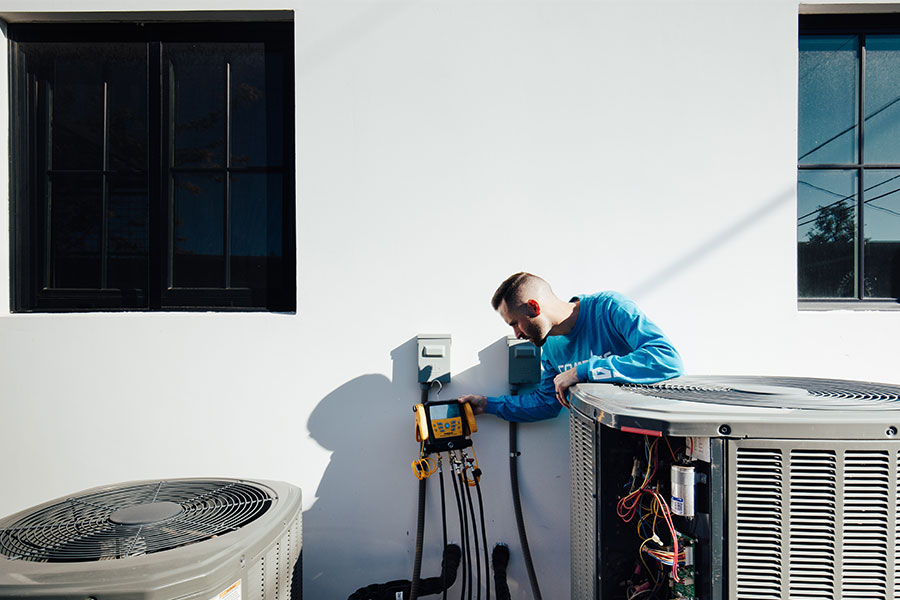
Your air conditioner runs thousands of hours over its lifetime. Like any mechanical system operating under that kind of demand, it needs regular attention to perform reliably and last as long as it should. AC maintenance is not a luxury or an upsell — it is the single most controllable factor in how long your system runs, how efficiently it operates, and how often it requires unplanned repairs.
This guide covers what professional AC maintenance actually includes, how it differs from basic homeowner upkeep, and when and how often to schedule it.
Why AC Maintenance Gets Skipped — and Why That’s Costly
Most homeowners don’t skip maintenance intentionally. The system is running, the house is cool, and there’s no obvious reason to call anyone. That logic is understandable, but it misses how HVAC systems actually degrade.
Air conditioners don’t typically fail all at once. They decline gradually — refrigerant pressure drifts slightly low, coils accumulate a thin film of dust, and electrical connections develop minor resistance. Each issue individually is small. Collectively, they force the system to work harder than it should, drawing more energy and accelerating wear on components that are already under load.
By the time performance drops noticeably, the system has often been running in a compromised state for months. The repair that follows is almost always more expensive than the maintenance that would have caught the problem early.
What Professional AC Maintenance Includes
A professional tune-up is a systematic inspection and service of the entire system — not just a visual check. Here is what a thorough visit covers.
Refrigerant Pressure Check
Refrigerant doesn’t get “used up” in normal operation. If pressure is low, there is a leak somewhere in the system. A technician will check operating pressures against manufacturer specifications and investigate any discrepancies. Catching a slow leak early prevents the compressor from running in a degraded state, which is one of the leading causes of premature compressor failure.
Coil Cleaning
Both the evaporator coil (inside) and the condenser coil (outside) accumulate debris over time. A dirty evaporator coil restricts heat absorption; a fouled condenser coil can’t release heat efficiently. Either condition forces the system to run longer cycles to achieve the same result. Cleaning both coils restores heat transfer efficiency and reduces runtime.
Electrical Component Inspection
Capacitors, contactors, and wiring connections are inspected and tested. Capacitors degrade with age and are one of the most common causes of a non-starting AC. Loose or corroded connections create resistance that generates heat, which shortens component life. Identifying a failing capacitor before it fails completely is a straightforward repair — replacing it after it takes out a contactor or damages the compressor is not.
Blower Motor and Airflow Check
The blower moves conditioned air through your home. A motor drawing too much current, a belt showing wear, or a fan wheel clogged with debris all reduce airflow and put unnecessary strain on the system. Airflow is also checked at the vents to confirm the ductwork is delivering what the system is producing.
Thermostat Calibration
A thermostat that reads incorrectly causes the system to run longer or shorter than needed. A calibration check confirms the control is reading accurately and responding correctly to temperature changes. This is a quick step that has a measurable impact on comfort and efficiency.
Condensate Drain Inspection
The condensate drain removes moisture extracted from indoor air. A clogged drain line can back up into the air handler, causing water damage and, in systems with a float switch, a complete shutdown. Clearing the drain during maintenance prevents an inconvenient and avoidable failure.
Overall System Performance Assessment
At the end of the visit, a qualified technician reviews the system’s overall condition — noting any components approaching end of life, flagging anything that warrants monitoring, and confirming that the system is operating within the manufacturer’s expected parameters. This is the context that helps you plan ahead rather than react.
What Homeowners Can Do Between Visits
Professional maintenance doesn’t replace basic homeowner upkeep — it works alongside it.
The most impactful thing you can do between service visits is keep the air filter clean. A clogged filter restricts airflow throughout the system, reducing efficiency and straining the blower motor and evaporator coil. Depending on the filter type and household conditions, replacement is typically needed every 1 to 3 months.
Keeping the outdoor condenser unit clear of debris is equally straightforward. Leaves, grass clippings, and vegetation that accumulate around the unit restrict airflow to the condenser coil. A two-foot clearance on all sides is a reasonable standard to maintain.
Beyond those two tasks, most homeowners are better served by leaving mechanical inspection and service to a professional. The components inside an air conditioner — refrigerant circuits, electrical panels, rotating equipment — require proper tools, training, and certifications to service safely and correctly.
How Often Should You Schedule AC Maintenance?
The standard recommendation across the HVAC industry is once per year for a central air conditioning system (U.S. Department of Energy). For most climates, late winter or early spring is the ideal timing — before the system is needed for the season and while service availability is more flexible.
Homes with year-round cooling demand, older equipment, or systems with a history of refrigerant issues may benefit from twice-yearly service. A technician familiar with your system can advise whether your situation warrants more frequent attention.
If you don’t know when your system was last professionally serviced — which is common when purchasing a home — scheduling an inspection is a reasonable first step. It establishes a baseline for the system’s condition and identifies issues that need attention before they become problems.
The Relationship Between Maintenance and Equipment Lifespan
A well-maintained central air conditioner can last 15 to 20 years (Lennox; Carrier). Systems that go without regular service typically fall short of that range — not because of a single catastrophic failure, but because of the cumulative effect of operating under conditions that were never corrected.
Maintenance doesn’t just extend life. It also preserves efficiency. An air conditioner operating with clean coils, proper refrigerant charge, and a functioning blower runs at or near its rated efficiency. One operating without those conditions uses more energy to produce the same result — a cost that shows up every month on your utility bill.
The math is straightforward. Annual professional maintenance costs a fraction of what a single major repair costs, and considerably less than an early replacement. For a system that represents a significant investment in your home’s comfort, it offers the most reliable return available.
Maintenance and Your Equipment Warranty
Many HVAC manufacturers require documented annual maintenance as a condition of their equipment warranty. Skipping service doesn’t just risk the system — it can void the coverage you paid for when the equipment was installed. Keeping service records is a simple precaution that protects the investment on both ends.

Schedule AC Maintenance with Compass Air
Compass Air Conditioning & Furnace Repair provides professional AC maintenance for homeowners who want their systems running right—not just running. Our technicians arrive prepared, work cleanly, and communicate clearly throughout the visit, so you know exactly what was found and what was done.
A well-maintained system is reliable. We make that easy.
Schedule a Visit or Request a Quote to get on the calendar before the season starts.